Jump to a section
Buy NAD+: vial, pen or nasal spray
The powder vial contains 1,000 mg; the prefilled pen contains 1,500 mg in 3 mL; the nasal spray contains 30 mg across 200 sprays. Each spray delivers 150 mcg. The vial contains dry powder, while the pen and spray arrive as prepared liquids. [1]
Online ordering is not available yet.
 PRODUCT IMAGE
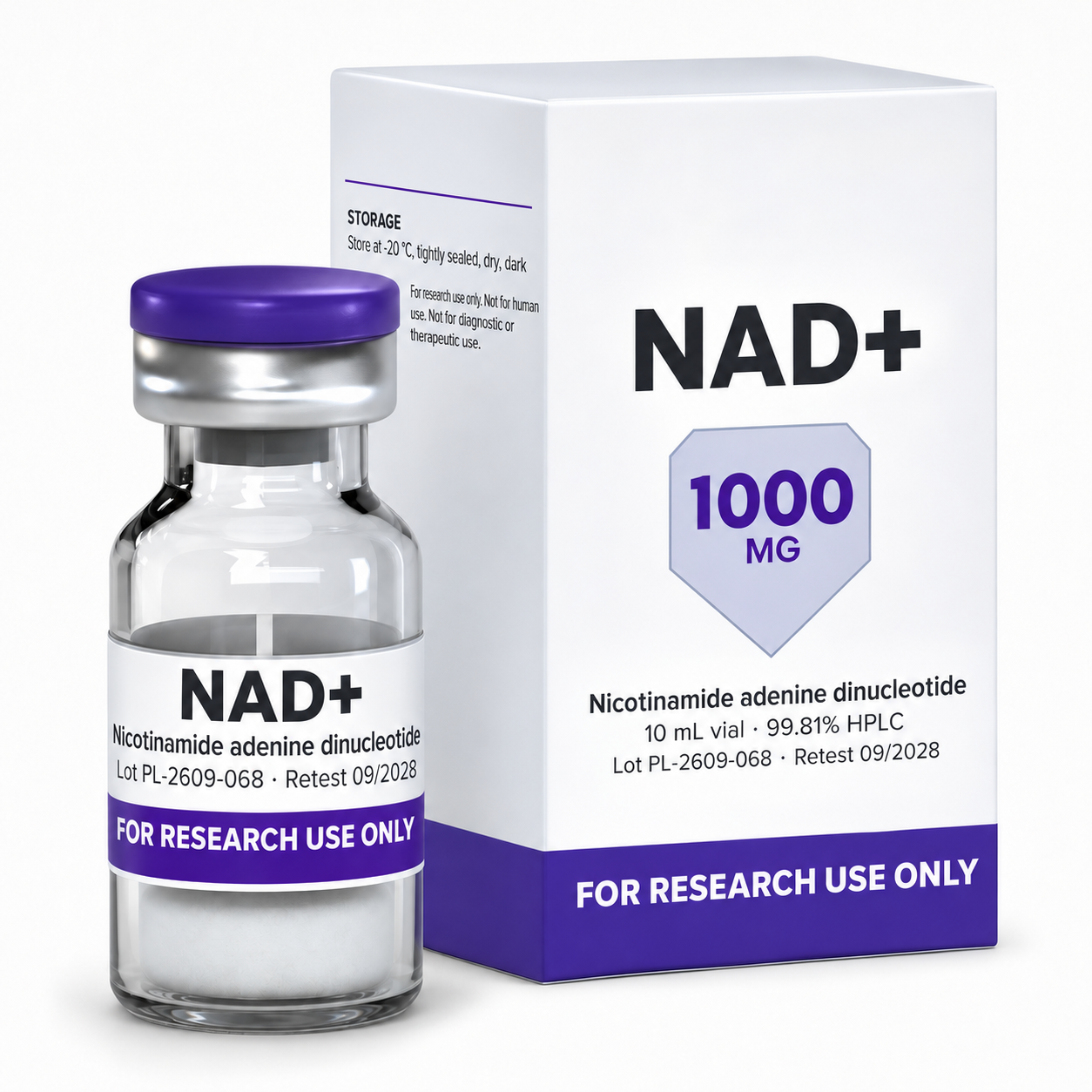
NAD+ 1,000 mg vial
One gram of NAD+ powder with the matching report for lot PL-2609-068.
- Contents
- 1,000 mg · 1 gram
- Container
- 10 mL vial
- Preparation
- Powder · reconstitution required
- Storage
- −20°C (−4°F) · dry and dark
Powder lot PL-2609-068: 99.81% HPLC area purity. No quantitative mg-per-vial content assay.
 PRODUCT IMAGE
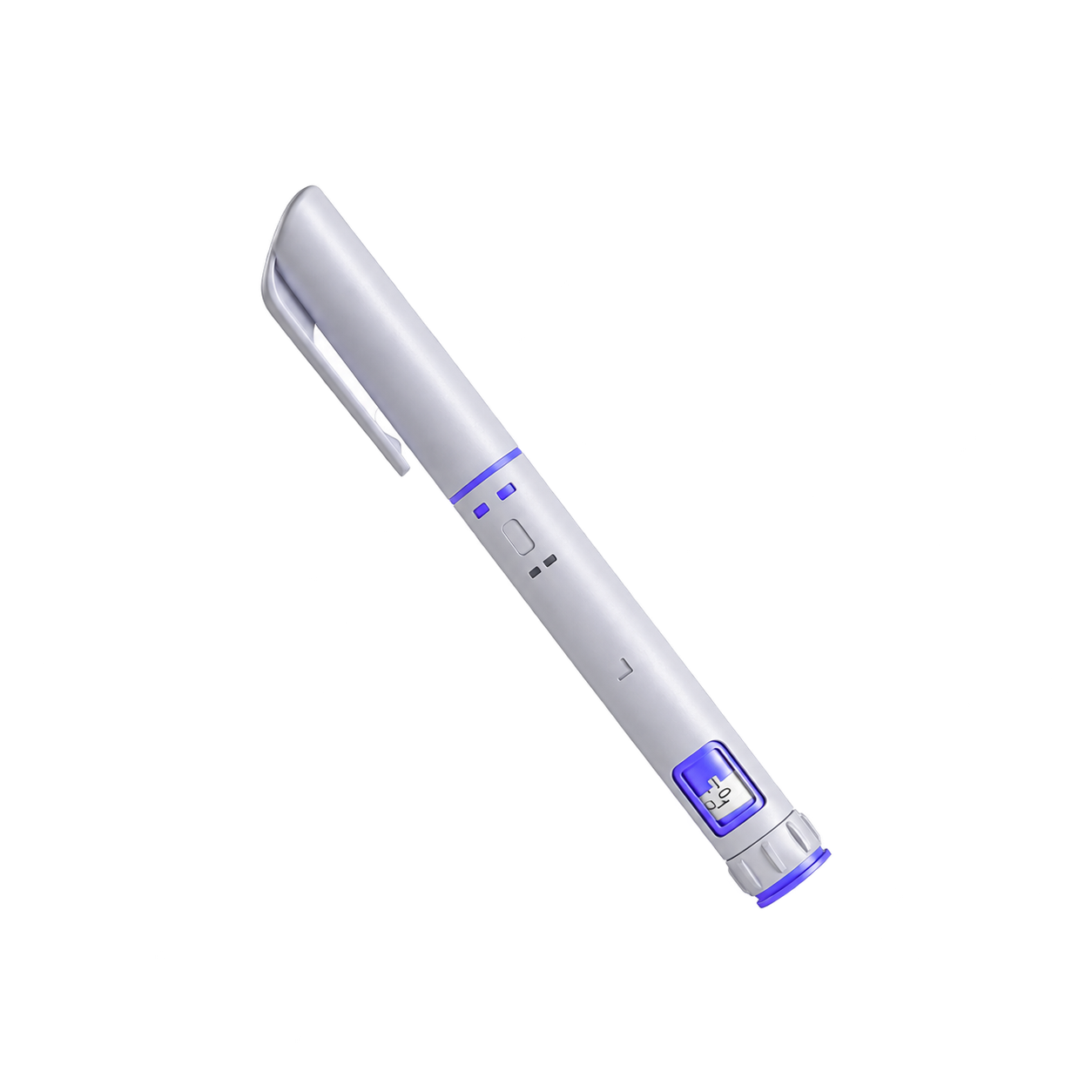
NAD+ 1,500 mg prefilled pen
3 mL of prepared solution at 500 mg/mL, with no powder-mixing step.
- Cartridge
- 3 mL · 500 mg/mL
- Solution
- Water + 0.9% benzyl alcohol
- Preparation
- Already mixed
- Storage
- 2–8°C (36–46°F) · do not freeze
Batch COA pending.
 PRODUCT IMAGE
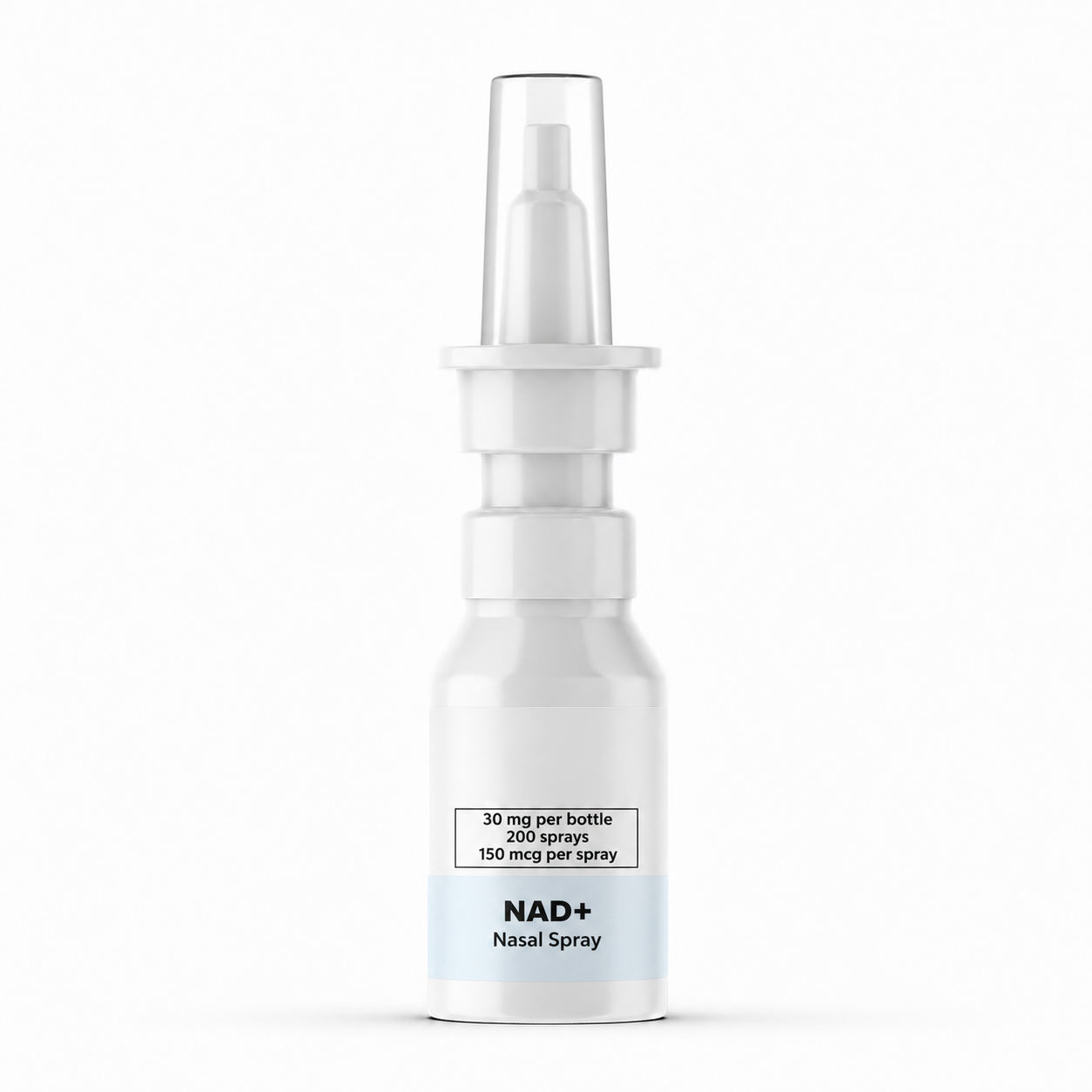
NAD+ 30 mg nasal spray
200 measured sprays, each containing 150 mcg (0.15 mg) of NAD+. Ready to use without reconstitution.
- Per spray
- 150 mcg · 0.15 mg
- Sprays per bottle
- 200
- Preparation
- Ready-made nasal solution
- Storage
- 2–8°C (36–46°F) · do not freeze
Batch COA pending.
Product photographs edited to remove supplier branding and update the displayed specifications.
| Compare | 1,000 mg vial | 1,500 mg pen | 30 mg nasal spray |
|---|---|---|---|
| Supplied form | Dry powder | Prepared solution | Prepared solution |
| Total NAD+ | 1,000 mg | 1,500 mg | 30 mg |
| Container or count | 10 mL vial | 3 mL cartridge | 200 sprays |
| Strength | Set by final solution volume | 500 mg/mL | 150 mcg per spray |
| Preparation | Reconstitution required | Ready-made solution | Ready-made solution |
| Measurement | Calculated liquid volume | Liquid volume at 500 mg/mL | Number of sprays |
NAD+ is the oxidized coenzyme involved in cellular energy reactions. NADH is its reduced partner; NR and NMN are precursor ingredients. The main NAD+ guide explains these differences, and the benefits article covers the human findings behind energy, recovery and healthy-aging claims.
NAD+ 1,000 mg powder vial
One 10 mL vial contains 1,000 mg, or 1 gram, of dry NAD+ powder. Its matching report identifies lot PL-2609-068 and records 99.81% HPLC area purity, a 663.6 Da identity result and a white lyophilized appearance. Store the sealed powder at −20°C, dry and protected from light. [1] [2]
The 10 mL figure describes the container capacity. Concentration is calculated from the final solution volume: 1,000 mg in 2 mL gives 500 mg/mL; 1,000 mg in 5 mL gives 200 mg/mL. A 100 mg quantity occupies 0.2 mL in the first example and 0.5 mL in the second.
The powder format allows the working concentration to be selected during preparation. Use a compatible diluent and a preparation method appropriate to the intended formulation, then record the final concentration and discard date. The NAD+ vial calculator converts the vial total and final volume into milligrams per millilitre, liquid volume and U-100 syringe units.
NAD+ 1,500 mg prefilled pen
500 mg/mL × 3 mL = 1,500 mg per pen. It contains 50% more NAD+ by mass than one 1,000 mg vial. The pen arrives as prepared solution, so there is no powder-reconstitution step. [1]
The solution contains NAD+, water and 0.9% benzyl alcohol. Keep it at 2–8°C, capped and protected from light, and do not freeze it. Follow the device's operating instructions for needle attachment, priming and administration.
| NAD+ amount | Liquid volume | Calculation |
|---|---|---|
| 25 mg | 0.05 mL | 25 ÷ 500 |
| 50 mg | 0.1 mL | 50 ÷ 500 |
| 100 mg | 0.2 mL | 100 ÷ 500 |
| 250 mg | 0.5 mL | 250 ÷ 500 |
These are liquid-volume calculations. The amount used and its frequency belong to the treatment or research protocol; operate the pen according to its own instructions.
NAD+ 30 mg nasal spray: 200 sprays
Each spray contains 150 mcg of NAD+, equal to 0.15 mg. The bottle contains 30 mg across 200 sprays: 30 mg ÷ 200 = 0.15 mg per spray. It is already mixed and requires no powder reconstitution. [1]
| Sprays | NAD+ in mcg | NAD+ in mg |
|---|---|---|
| 1 | 150 mcg | 0.15 mg |
| 2 | 300 mcg | 0.3 mg |
| 3 | 450 mcg | 0.45 mg |
| 4 | 600 mcg | 0.6 mg |
Two hundred sprays can be counted as 100 two-spray portions or 50 four-spray portions. Those figures describe bottle quantity, not a daily schedule. Store the bottle upright at 2–8°C, capped and protected from light, without freezing.
Nasal and injectable amounts remain separate because delivery route affects absorption. The dosage article gives the spray-count arithmetic alongside the published injection schedules, and the results article explains which outcomes were measured for each studied route.
How many portions do the vial and pen contain?
A 1,000 mg vial contains twenty 50 mg portions or ten 100 mg portions by mass. A 1,500 mg pen contains thirty 50 mg portions or fifteen 100 mg portions. Divide the total milligrams by the amount in each calculation.
| Amount per portion | 1,000 mg vial | 1,500 mg pen |
|---|---|---|
| 25 mg | 40 portions | 60 portions |
| 50 mg | 20 portions | 30 portions |
| 100 mg | 10 portions | 15 portions |
| 250 mg | 4 portions | 6 portions |
These divisions assume the whole labelled amount is available. Residual solution, transfers, priming and the product's discard date affect usable yield. A portion count does not set the amount or frequency of administration.
Changing a vial's final volume changes the liquid measurement, while the total NAD+ remains 1,000 mg. For example, 100 mg occupies 0.2 mL at 500 mg/mL and 0.5 mL at 200 mg/mL. Both contain the same amount. The dosage page includes the calculator, preparation examples and study schedules.
NAD+ price per milligram and per spray
Divide the product price by its total NAD+ content to calculate cost per milligram. Use 1,000 mg for the vial, 1,500 mg for the pen and 30 mg for the nasal bottle. For the spray, dividing the bottle price by 200 gives the cost per spray.
| Product | Price per mg | Price for an example amount |
|---|---|---|
| 1,000 mg vial | Vial price ÷ 1,000 | 100 mg: vial price ÷ 10 |
| 1,500 mg pen | Pen price ÷ 1,500 | 100 mg: pen price ÷ 15 |
| 30 mg nasal spray | Bottle price ÷ 30 | One spray: bottle price ÷ 200 |
At one and a half times the vial price, the pen has the same cost per milligram. Format, preparation and the supplied device also affect the comparison. Current prices and ordering are not listed on this site.
Storage: powder, pen and spray
−20°C / −4°F
Keep the vial tightly closed, dry and protected from light. Let the closed vial reach room temperature before opening to limit condensation.
2–8°C / 36–46°F
Keep the pen and spray capped and protected from light. Keep the spray upright. Do not freeze either prepared product.
The powder certificate's retest date is 17 September 2028, under the named lot's storage conditions. Follow the preparation-specific discard date after mixing. Prepared vial solution should be refrigerated and protected from light. [2] [1]
Discard a pen that has frozen or develops new discolouration or cloudiness, as specified in its handling instructions. Clear appearance and preservative content do not replace the preparation's storage and discard instructions.
NAD+ 1,000 mg certificate of analysis
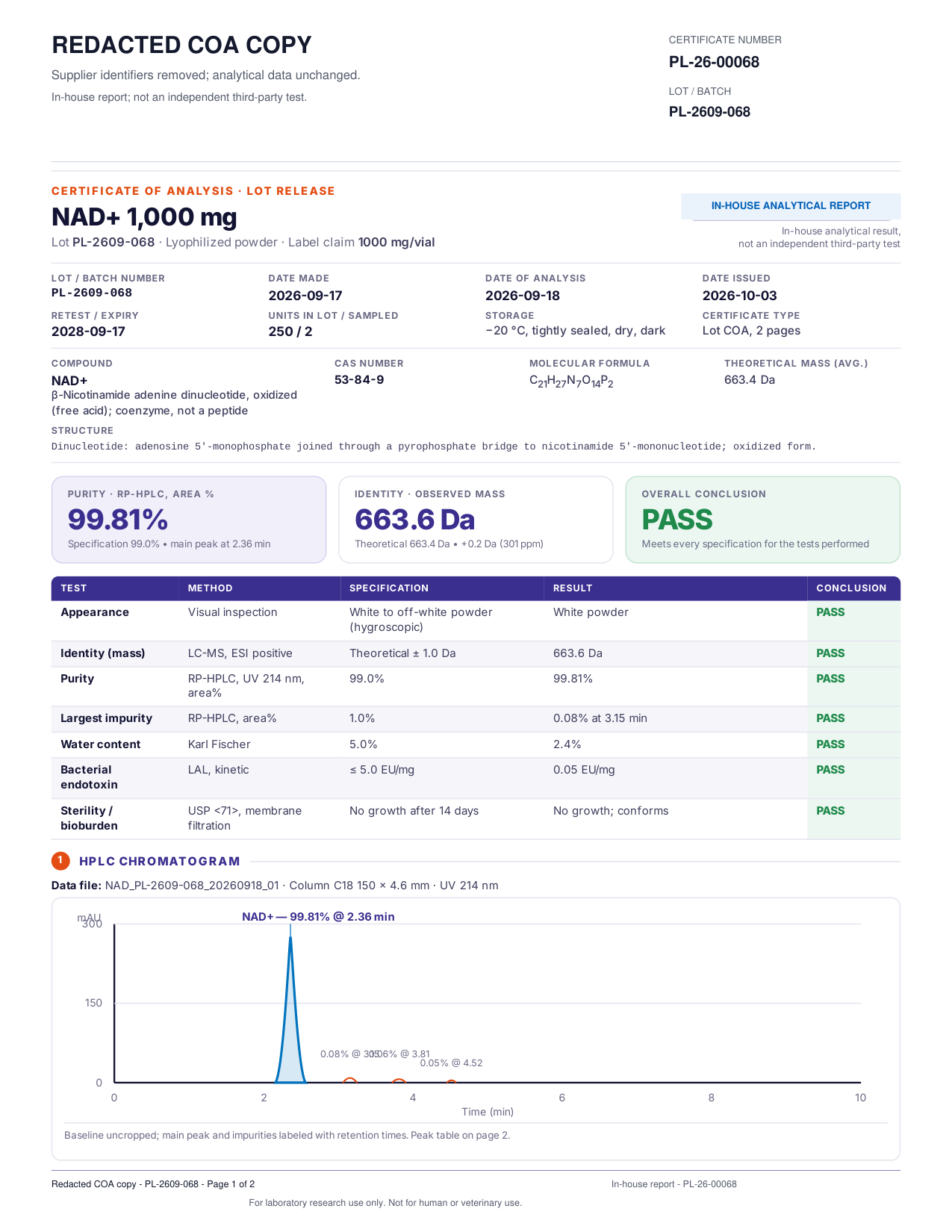
NAD+ 1,000 mg — lot PL-2609-068
2 sampled powder vials from lot PL-2609-068; in-house testing. No separate quantitative vial-fill assay, finished-pen test or finished-spray test.
Open redacted COACertificate PL-26-00068 covers two sampled powder vials from lot PL-2609-068, a lot of 250. The displayed PDF is a redacted copy of the in-house report. Supplier identifiers were removed; analytical results, dates and batch information are retained. [2]
The powder was manufactured on 17 September 2026 and analysed on 18 September. Water testing followed on 19 September, endotoxin testing on 20 September and sterility testing on 1 October. The report was issued on 3 October 2026.
| Test | Reported result | What it measures |
|---|---|---|
| RP-HPLC | 99.81% area purity | Relative integrated chromatographic peak area |
| LC-MS identity | 663.6 Da | Observed mass, compared with 663.4 Da theoretical |
| Karl Fischer water | 2.4% | Water content in the tested sample |
| Kinetic LAL endotoxin | 0.05 EU/mg | Endotoxin result under the stated method |
| USP <71> sterility | No growth after 14 days | Result for the sampled material and test conditions |
The printed HPLC areas are 4,291,830 for the main peak and 4,300,000 in total, giving 99.81% area purity. This measures the relative peak area. It is separate from a quantitative mg-per-vial assay: 99.81% does not mean a measured 998.1 mg fill.
The results apply to the sampled powder lot. They do not extend to a finished pen, nasal solution or later mixed vial. Match lot PL-2609-068 when referring to this certificate. For adverse effects associated with NAD+ administration and prepared products, see the side-effects article.
Questions & answers.
How much NAD+ is in the prefilled pen?
The pen contains 1,500 mg in 3 mL at 500 mg/mL. It is already mixed and contains 50% more NAD+ by mass than one 1,000 mg vial.
Is the 1,000 mg vial already mixed?
No. The 10 mL vial contains dry NAD+ powder. Final concentration depends on the solution volume used during preparation: 1,000 mg in a final 2 mL gives 500 mg/mL, while 5 mL gives 200 mg/mL.
How much NAD+ is in one nasal spray?
One spray delivers 150 mcg, or 0.15 mg. The bottle contains 30 mg across 200 sprays. Two sprays contain 300 mcg, three contain 450 mcg and four contain 600 mcg.
How much liquid contains 100 mg in the pen?
At 500 mg/mL, 100 mg occupies 0.2 mL. A 50 mg amount occupies 0.1 mL and a 25 mg amount occupies 0.05 mL. Follow the pen’s own operating instructions when measuring with the device.
How many two-spray portions are in a bottle?
A 200-spray bottle contains 100 two-spray portions. Each two-spray portion contains 300 mcg, equal to 0.3 mg. This is a quantity calculation, not a daily schedule.
Which product does the COA cover?
The certificate covers two sampled 1,000 mg powder vials from lot PL-2609-068. It is an in-house report for that powder lot; finished pens and sprays have a separate testing scope.
Does 99.81% HPLC purity measure the vial fill?
The 99.81% figure is a relative chromatographic area result. It does not measure the total milligrams inside each vial; quantitative fill content is a separate test.
Why is the COA described as redacted?
Supplier branding and contact details were removed from the displayed copy. The analytical results, dates and lot identifiers remain, and the report is still identified as in-house testing.